2 Moisture Theory
2.1 Moisture in Air
All building parts and materials (except those in underwater structures) are surrounded by air. Air is capable of absorbing and discharging moisture and this property is central to almost all moisture issues.
2.1.1 Equation of State – Partial Pressure
Atmospheric air consists of a combination of gases and the composition of air is practically the same everywhere. The most significant exception to this rule is water vapour. The content of water vapour in the air may vary considerably in terms of geographical location, temperature, season, and other factors.
Humid air can be considered an air-vapour mixture. Both follow common physical laws, including the so-called ideal gas law
As indicated in the name, the ideal gas law applies to ideal gases (i.e., an accumulation of particles that only interact when they collide). The collisions are elastic and the kinetic energy is therefore preserved during collisions. Gases nowhere near condensing behave much like ideal gases.
where
The mole (symbol: mol) is a basic SI unit of measurement. The mole is a unit of amount of substance typically used for quantities of elementary entities (such as atomic, subatomic, and molecular particles). One mole is defined as the amount of substance containing the same number of molecules as there are atoms in 12 g carbon-12 (the 12C-isotope).
The number of units per mole is known as the Avogadro constant (designated NA). At present, it is approximated as follows: NA = 6.022 × 10²³.
It is advisable to treat dry air and water vapour separately because water vapour concentration varies considerably. The molar mass for dry atmospheric air is calculated at approx. 29 g/mol while it is approx. 18 g/mol for water vapour.
In a gas mixture, each gas contributes to the total pressure (they each contribute a so-called partial pressure). The total pressure therefore equals the sum of the partial pressures of each separate gas. The partial pressure of each gas in the mixture corresponds to the share of molecules of the given gas relative to the total amount.
For practical applications, the total pressure will normally equal the atmospheric pressure. Thus, it can be said to be composed of two partial pressures: one for dry air and one for water vapour.
Normal atmospheric pressure is 101325 Pa (= 1 atm = 760 mm Hg). The partial pressure of water vapour in air at 20 °C and 50 % RH is approx. 1 % of this.
According to the ideal gas law, a given volume at a specific temperature and pressure will always contain an identical number of molecules. As the mass of dry air molecules is greater than that of water molecules, dry air weighs more than water vapour. Therefore, if dry air is mixed with water vapour, the mixture will be lighter the higher the water vapour content is.
2.1.2 Water Vapour Content – Water Vapour Pressure
The humidity content of porous materials depends on the humidity content in the ambient air, and it makes good sense, therefore, to develop a clear understanding of air humidity content. The humidity/water content of the air can be described thusly:
- moisture content/water vapour concentration – ν [kg/m3] – equals the mass of the gas (e.g., water vapour) divided by the volume.
- the partial pressure of water vapour – pv [Pa = N/m2] – indicates the pressure exerted solely by the water vapour.
- The absolute humidity (sometimes called humidity ratio) – x [kg/kg] – describes the ratio of the masses of vapour to the dry air making up a mixture.
The correlation between moisture content and partial pressure is calculated by inserting the molar mass of water – 18.015 g/mol – into the ideal gas law formula (equation (1)). The water vapour content (ν,) can then be expressed as a function of partial pressure and temperature.
where
The constant 461.4 derives from the unit [Pa ∙ m3/(kg ∙ K)]
where
The equations can be used to calculate the partial pressure resulting from a given vapour content or vice versa.
Example:
For air with a moisture content of 0.007 kg/m3 at a temperature of 21 °C, the corresponding partial pressure can be calculated as
Before this, pressure was commonly expressed in terms of water column height (mm H2O) or mm mercury (mm Hg). 1 mm H2O equals 9.81 Pa and 1 mm Hg equals 133 Pa.
Equation (3) implies that moisture content at a set vapour pressure drops as the temperature rises (or that the pressure at a set moisture content rises as the temperature rises). However, in practice, the drop is so slight that it can be ignored.
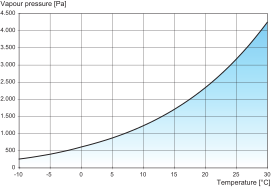
Figure 1. The maximum moisture content in the air (and thus the partial pressure of the saturated water vapour) rises dramatically as the temperature rises. For a large-scale water vapour chart, see figure 128.
The absolute humidity is based on the ratio between the masses of the gases in a mixture (here a mixture of water vapour and atmospheric air) and this ratio does not change with the temperature (the temperature changes both gases uniformly).
The following correlation between the absolute humidity (x) and the moisture content per unit of volume (v) applies:
where
The density of dry air varies with the temperature and is approx. 1.3 kg/m3 at 0 °C while it is approx. 1.2 kg/m3 at 20 °C.
2.1.3 Relative Humidity (RH)
Air contains a limited amount of water vapour at a given temperature. This maximum moisture content is called the saturation content (or saturation vapour pressure if using partial pressure). If the temperature is raised, the air can contain more water vapour and the saturation content/saturation vapour pressure is thus proportional to temperature. This physical correlation is evident in Figure 1, showing the saturation vapour pressure in Pa as a function of temperature. The saturation content/saturation vapour pressure is determined empirically.
Vapour Pressure
A calculation of the saturation vapour pressure can be made, for example by using the following approximation formula:
where
θ is the temperature (°C).
The calculation is not an exact expression, but the deviation is less than 0.15 % in the range from 0 to 80 °C.
The correlation is often expressed in chart form on the so-called vapour pressure diagram, which will be discussed next.
Normally, air only contains a minor share of the maximum amount of vapour possible.
The existing water vapour content is normally described in terms of relative humidity (RH). Relative humidity is the amount of water vapour present in the air relative to the total amount possible at the same temperature.
where
RH can assume values between 0 and 1 and may also be expressed as a percentage. For example, if the air contains 40 % of the maximum amount possible, the relative humidity is 0.4 or 40 %.
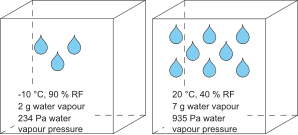
Figure 2. 1 m3 of air at a temperature of -10 °C with a relative humidity of 90 % contains approx. 2 g water vapour exerting a water vapour pressure of approx. 234 Pa. A comparison of 1 m3 of air at 20 °C and 40 %, indicates that this air contains approx. 7 g water vapour, exerting a water vapour pressure of approx. 935 Pa. Even though, at the low temperature, the air contains less water vapour and has a lower vapour pressure than it does at the higher temperature, the relative humidity of the cold air is far higher. The correlation between temperature, water vapour pressure or moisture content, and relative humidity is often expressed in a water vapour chart (see Figures 1 and 3). When two of the variables in the water vapour chart are known, the third appears from the diagram.
When cooling air with a given moisture content, the relative humidity (RH) will rise as evident when following the horizontal line (i.e., identical moisture content) in Figure 3 towards the left. This can also be expressed by equation (7). When v_m drops with the temperature and v_{actual} remains unchanged, v_{actual} /v_m will rise resulting in a higher relative humidity.
Relative humidity is normally used preferentially in place of water vapour content [kg/m3]. This is partly because the relative humidity is easier to measure and partly because the relative humidity determines the moisture content of building materials. This point will be elaborated upon later.
For pedagogical reasons, g water per m3 of air instead of water vapour pressure has been used in the water vapour chart shown in Figures 3, 4, and 5. Using g water per m3 of air is a good approximation, which proves fully adequate in practice. For an accurate calculation, the saturation vapour pressure should be used to discover the dew point temperature for air at a given temperature and relative humidity (see the water vapour chart, figure 128).
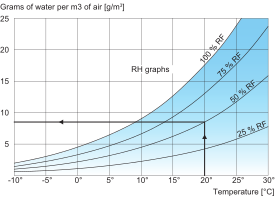
Figure 3. A water vapour chart. The top curve indicates the maximum moisture content possible in g per m3 of air as a function of temperature – corresponding to 100 % relative humidity (RH). The other curves express moisture content respectively at 25, 50, and 75 % RH (i.e., with a water vapour content corresponding to 25, 50, and 75 %, respectively), of the maximum amount possible (i.e., of the corresponding values on the top curve). If a room has a temperature of 20 °C and an RH of 50 %, the y-axis shows the water vapour content to be approx. 9 g per m3 of air. For a large-scale water vapour chart, see the inside front cover of these Guidelines.
A water vapour chart shows that if air at a given temperature and a given relative humidity is heated without further water vapour being added, the relative humidity will drop, corresponding to a horizontal movement right in the chart (see Figure 4).
Conversely, the cooling of air with a given content of water vapour will mean a rise in relative humidity, corresponding to a horizontal movement left in the chart. If cooling continues, the relative humidity will rise until it reaches 100 %.
The temperature at which relative humidity reaches 100 % is called the dew point temperature or just the dew point and appears on the diagram’s x-axis vertically below the point of intersection (see Figure 5).
If the air is cooled to below dew point, it can no longer hold all the water vapour originally contained in it, as it can only contain a moisture content corresponding to RH = 100 %. Some of the water will therefore be separated out as dew, beginning when dew point is reached.
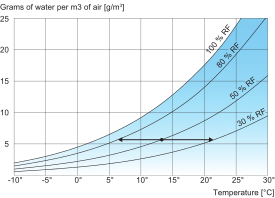
Figure 4. The arrows in this water vapour chart illustrate how heating will cause the relative humidity (RH) to drop while cooling will cause it to rise. Heating air from 13 °C with an RH of 50 % to 21 °C without changing the moisture content corresponds to moving horizontally right in the diagram (see arrow moving right). At 21 °C, the moisture content corresponds to 30 % of the maximum amount possible at this temperature, meaning that RH has dropped to 30 %. Cooling the air to 6 °C, instead, corresponds to moving left in the diagram (see arrow moving left). At 6 °C, the moisture content corresponds to approx. 80 % of the amount possible and the relative humidity will thus rise to 80 %.
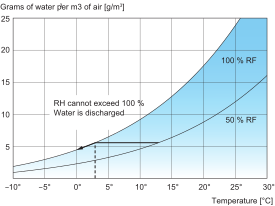
Figure 5. When air is sufficiently cool, the relative humidity will rise until it reaches 100%. For example, when cooling air from 13 °C with an RH of 50 % (cf. Figure 4), RH will rise until it intersects with the top curve (RH = 100 %). The temperature at which this takes place (the dew point) is reached at approx. 3 °C. The content of 5.5 g water vapour per m3 of air which, at 13°C, corresponds to approx. 50 % RH, will thus correspond to 100 % RH at 3 °C. If the air is cooled even more, for example, to 0 °C, it is only able to hold approx. 4.5 g water vapour per m3, and the remaining 1 g of water vapour is discharged as water (condensate) during cooling.
2.1.4 Surface Condensation – Thermal Bridging
In winter, building parts will insulate warm indoor air from cold outside air. Well-insulated building parts may contain so-called thermal bridges (i.e., areas where the insulation is less effective than elsewhere in the building part). In thermal bridges, the surface temperature is lower than in the surrounding areas and indoor air meeting a surface near the thermal bridge will be cooled down, resulting in a rise in the relative humidity. The relative humidity on the surface of the building part is thus higher near the thermal bridge than on the rest of the surface.
When the temperature drops, airborne molecules, and dust particles such as soot from candles or log-burning stoves slow down and will therefore more easily be captured by and deposited on the surface. In this way, dust figures/dark discolorations may appear, ‘manifesting’ thermal bridges on the wall. Blackening can have causes other than thermal bridging.
Locally, the temperature may be so low that there is a risk of the air being cooled down to below dew point temperature (e.g., on window panes or a poorly insulated exterior wall). If this occurs, water vapour will condense on the cold surface. Condensation problems occur more frequently during wintry conditions where surface temperatures are low. The windows are usually the coldest spot in a room and, in practice, airing should performed to prevent condensate from appearing on the insides of the windows. In the past, the coldest parts of windows were the glass in insulating glazing units or coupled frames. In windows fitted with high-performance energy glass, the edge of the pane or the movable frames are usually the coldest spots (see Figure 6).

Figure 6. For indoor air at 20 °C and 50 % RH, dew point temperature is approx. 8 °C (see water vapour chart in Figure 3). This means that there will normally be no risk of condensate forming on modern energy glass with a surface temperature of approx. 16 °C. There is, however, a powerful thermal bridge at the edge of insulating glazing units or on the moving frame, resulting in the temperature being some degrees lower, which, at a high relative humidity, may form condensate in the room or in certain areas (e.g., behind a curtain). This problem can, to some extent, be countered by using insulating glazing units with ‘warm edges’.
Furthermore, thermal bridging will often occur when joining building parts (e.g., between exterior walls and roofs) where they may cause increased heat loss. The Building Regulations and DS 418 specify the national requirements for thermal bridging and linear thermal transmittance.
To avoid condensation, brief airing should be carried out if necessary (for the purpose of exchanging moist air) combined with heating to ensure that the surface temperature does not drop below dew point. The need for airing is greatest in old poorly insulated buildings.
The temperature of a well-insulated exterior wall will only be 1-2 °C below room temperature during winter and, consequently, condensation will practically never occur on such a wall. Conversely, on the inside of a poorly insulated exterior wall, the temperature may well be 5–6 °C below room temperature with the risk of a very high relative humidity on the wall surface and potential condensation.
In severe cases of thermal bridging, mould growth may appear on the surface (see Section 5.5 Mould Growth). Mould growth is typical in old houses with uninsulated (cavity) walls. For example, in poorly heated bedrooms with high humidity levels, mould growth may occur in the corners where the temperature is lower.

Figure 7. Winter interior and exterior surface temperatures and the temperature change, through a solid exterior brick wall and through a 410 mm insulated exterior cavity brick wall with an inner wall of aerated concrete. An uninsulated cavity wall will have essentially the same inside surface temperature as a solid wall, which entails a risk of a high surface RH. This can lead to dust accumulation (dark discolorations) and, at worst, condensation and mould behind pictures and furniture.
In such cases, mould growth can be countered to some extent by better airing and heating and not placing large furniture against exterior walls. Furniture should be placed at a slight distance from exterior walls regardless, so that warm air can circulate behind it.
Avoiding heating and constantly airing (as is sometimes practiced in bedrooms) is not recommended. It both wastes energy and leads to a drop in surface temperature. The latter carries a risk of further condensation. The best conditions are achieved by moderate heating and brief but thorough airing twice a day. A brief airing will remove moist air without significantly lowering surface temperatures and it is cheap to heat the fresh air.
In composite layered building construction, moisture from indoor air may penetrate the coldest parts of the construction. To avoid humidification, moisture from the inside must be removed as quickly as it occurs. If more moisture is added than removed, at some point the air moisture content will exceed saturation level and water will be discharged as condensate on interior surfaces in the construction.
Humidification can lead to mould growth and decomposition resulting from decay or dry rot. Therefore, steps must be taken to ensure that moisture that penetrates the structure from the inside is able to pass through without accumulating. This is typically achieved by installing a vapour barrier on the inside, limiting the flow of moisture, supplemented by fresh-air ventilation, which will remove moisture from the outside (see Section 2.4 Moisture Transport).
Condensation may also occur in enclosed cavities due to the quick cooling of surface areas. This phenomenon typically occurs in roof constructions where still air may be present on the underside of a ventilation slit (e.g., within a light metal roof). On clear nights, the roof will cool down to below the dew point temperature of the ambient (air) due to radiation to the atmosphere.
Moist air in contact with the underside of the roof will therefore form condensate on the underside of the roof covering. For this reason, a roof underlay is usually fitted to light and tight roof coverings to ensure that dripping condensate can be drained away without causing damage.
2.2 Moisture in Building Materials
Building materials that are exposed to moisture in vapour or liquid form will normally absorb moisture. This is because most building materials are typically porous (i.e., they contain pores or cavities of different kinds).
Exceptions to this are metals, glass, and other completely watertight materials that are impervious to water or water vapour. Moisture in porous building materials may have been absorbed from moisture contained in the ambient air during the production phase, from moisture in adjacent materials, or through direct water impact such as precipitation or leakage.
The moisture content is relative to the material’s exposure to moisture, the material type, and the properties of the capillary system, including the specific moisture binding that occurs.
The shape and size of the pores are decisive factors for the moisture absorption of materials and the possibility of moisture transport through them. The diameter of these pores can range from several millimetres down to the scale of molecules. In practice, calculations are normally performed using a lower limit of 0.3 ∙ 10-9 m = 0.3 nm (where nm is a millionth of a millimetre), corresponding to the diameter of a water molecule.
Pore systems do not follow hard and fast rules. It is relatively simple to determine the open pore volume (e.g., by prolonged immersion in water). Nevertheless, some pores will not be filled, either because they are very small or because they are closed. Given their relative impenetrability, these pores are not particularly interesting from a moisture control perspective. Determining the size and distribution of these small pores is extremely complex but, to some extent, feasible by so-called suction methods.
Pore systems can be broken down according to the structure of the given material and categorised as follows (also shown in Figure 8).
Materials in group 1 do not take up moisture and are therefore designated as non-hygroscopic. Materials in the categories 2–4 will all draw moisture into their pore systems and are designated as hygroscopic (i.e., they are capable of exchanging moisture with the ambient air).
- Materials without pores. This group comprises metals, glass, and certain plastics.
- Materials in which the solid matter is continuous, and the pores are closed and mutually isolated. There is therefore, no possibility of moisture transport between pores, or if there is, its extent is very limited. Examples of this type of material include foamed glass, extruded polystyrene, expanded polyurethane, and certain types of expanded clay aggregate.
- Materials in which the solid matter is continuous, and the pores constitute continuous systems through the material. The most commonly used building materials belong in this category and include wood, concrete, aerated concrete, and brick.
- Materials in which the structure of the solid matter is discontinuous (not bound together) in a continuous amount of air (or where the ‘pores’ are continuous). Materials in grain or powder form and mineral wool belong in this category.
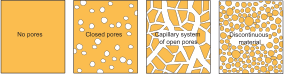
Figure 8. From the left, a material without pores (such as metal), a material with closed pores (e.g., foamed plastic or foamed glass), a material with open pores where one side of the material is connected to the other via pores (such as brick), and on the far right, a material consisting of discontinuous material parts and a large amount of air (such as grit), where the actual material only comes into contact intermittently via minute parts of its surface area.
In most porous materials, the pores form a continuous system, which is more or less permeable to air, water vapour, and water in some cases. In dry materials, the pores are air-filled. In wet materials, the pore system is more or less water-filled (Godtfredsen & Nielsen, 1997)
The maximum amount of water contained by porous material depends on the porosity (n) which expresses the share of pore volume relative to the total volume.
Porosity can be determined as:
where
Porosity can assume values between 0 and 1 and may also be expressed as a percentage.
A distinction can be made between:
Macropores: Pores with a radius of r > 0.1 mm (i.e., visible to the naked eye).
Micropores: Pores with a radius of 100 nm < r < 0.1 mm (i.e., pores visible in a standard microscope).
Submicropores: Pores with a radius r < 100 nm (i.e., pores not visible in a standard microscope).
Pore size is significant to how humidification occurs in a material (cf. Section 2.2.3 Capillary Suction (Wicking)).
Materials with coarse pores will take on moisture very quickly. If the end of a brick (which has coarse pores) is soaked in water, the whole brick (which is relatively short) will quickly fill up with water. By contrast, capillary rise is greatest in fine-pored materials (see Figure 9) and in a longer material with finer pores, one would expect the ultimate rise to be greater than in brick.
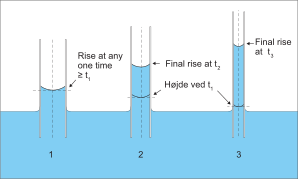
Figure 9. Capillary rise in capillary tubes/pores at different times.
- Water rises faster in the coarse capillary tubes/pores as shown by the capillary rises linked to time t1 but does not ascend far.
- In the case of finer capillary tubes/pores, the water rises more slowly, but ascends further.
- The maximum capillary rise is achieved by the finest pores.
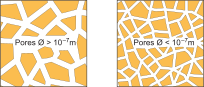
Figure 10. Porous building materials such as wood, brick, and concrete are criss-crossed by a system of pores or capillaries. The pore system means that water vapour from ambient air will infiltrate into the pores and water will be drawn up by the material via capillary suction (wicking). In coarse pores (Ø > 10–7 m) wicking is fast. In finer pores (Ø < 10–7 m) wicking is slower, but the water will be drawn further up into the material. In the finest pores (the micropores) water vapour will be drawn up like water, so that the pores are water-filled even though the material appears to be dry.
2.2.1 Moisture-Binding Properties of Materials
In the process of binding itself to materials, water will also give off an amount of heat known as sorption heat. The stronger the binding, the greater the heat emission. Similarly, energy is required to break the binding. The stronger the binding, the more energy is required to release the water. However, these issues are usually of no consequence in a structural context.
The binding of water will alter the properties of the materials (e.g., wood swells in conditions of increased humidity).
Water can be bound either chemically or physically. In chemical bindings, the water is normally firmly retained. Chemical bindings include both actual material changes and the formation of water of hydration (as is the case with gypsum).
Chemically bound water (as opposed to physically bound water) plays no significant part in the common effects of humidity.
Moisture in building materials is usually experienced as physically bound water (i.e., water which may vaporise at a specific temperature, usually 103–105 °C). Physical binding can be divided into three main groups:
- Adsorption
- Capillary condensation
- Osmotic forces
Adsorption is an effect of attractive forces (adhesion forces) between the molecules in the surface of materials and water molecules. At low relative humidity, only a single layer of water molecules is bound to the material, but when the RH rises, the number will rise (the thickness of the moisture layer). It is estimated that it is possible to adsorb up to approx. 30 molecular layers. This produces a moisture layer that is approximately 10 nm thick (i.e., approx. 0.000 000 01 m).
Physical bindings are usually weak compared to the chemical bindings, but the first moisture layer is retained by a force corresponding to 1,000–2,000 MN/m2 (i.e., an atmospheric pressure of 10,000–20,000 atm). The outer layers of molecules, on the other hand, are bound much less firmly.
The moisture layer is not stationary, since the heat movement of the water molecules means that water molecules are constantly breaking away while others are captured.
Beyond the ambient relative humidity, the amount of moisture capable of being bound by adsorption depends on the material’s specific surface area (the surface area of the material and its pores relative to its volume). This can vary from zero to several hundred m2 per gram of material. To give an example, wood has a specific surface area of approx. 30,000 m2/kg. This means that a single molecular layer on the whole of the specific surface area corresponds to a moisture content of about 5 kg/m3.
A liquid in contact with a solid material will settle on its surface, forming a characteristic angle with its surface known as the contact angle. The size of this contact angle depends on the adhesion between material and liquid. For commonly used building materials, the contact angle with water is very small (approximately 0). This means that surface areas are easily humidified. The small size of the contact angle is also the reason for the occurrence of capillary suction in porous materials (see Section 2.2.3).
Capillary suction can be reduced or prevented with hydrophobic agents, which break the adhesion forces between material surface and water. Wax, silicone, and oil are examples of such agents.
Capillary condensation is due to a secondary impact of the adhesion forces. In building materials, the pores/capillaries are irregular in both size and shape. Standard physical laws do not apply in the same way as where there are more regular pores.
The thickness of the adsorbing molecule layers increases proportionally with an increase in RH. At the same time, the air-filled part of the pores decreases in size. At some point, the layers on the two opposite pore walls meet in places where the pores are smallest. Here, the pores are filled with liquid in a specific area (see Figure 11).
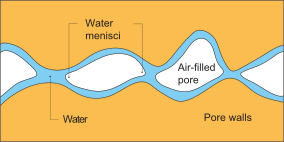
Figure 11. When the RH in the pores increase, the thickness of the moisture layer on the pore walls is increased and, at some point, the pores from the two opposite sides will meet at the narrowest point.
The surface tension forces the water molecules to assume a concave shape, meaning that two water menisci are formed on either side of the pores.
Water molecules nearing a concave surface are drawn more forcefully than they would be to a planar surface and it is harder for them to move away from the surface again. Thus, water molecules may be captured by the menisci (i.e., condense) at an RH that may be significantly below 100 %. This phenomenon is known as capillary condensation. Capillary condensation to occur, requires sufficiently high RH the level of which is dependent on pore size. Table 1 shows examples of the correlation between RH and the largest pore diameter capable of triggering capillary condensation. The table shows that the pores need to have a diameter below 100 nm for condensation to occur significantly below 100 % RH.
Table 1. Correlation between RH and radius of curvature at 20 °C
RF [%] | Radius of Curvature at 20 °C [10-9 m] |
|---|---|
10 | 0.5 |
20 | 0.7 |
30 | 0.9 |
40 | 1.2 |
50 | 1.6 |
60 | 2.1 |
70 | 3.0 |
80 | 4.8 |
90 | 10.2 |
98 | 53.4 |
99 | 107 |
99.9 | 1078 |
99.99 | 10791 |
100 | ∞ |
Capillary condensation is practically insignificant at low relative humidity and condensation will only occur in minute pores. In practice, the number of these minute pores is generally irrelevant to the moisture content. Not until RH reaches 80–90 % does capillary condensation become significant, and, after this, the effect increases sharply.
Osmotic forces are due to the presence of salts in the material. Salt content (which is almost always low) often results in reduced water vapour pressure in a material. It is difficult to distinguish whether water is bound by adsorption or osmosis, and, in practice, osmosis is usually disregarded. Nevertheless, salts may be very significant to the moisture content in materials exposed to salt (e.g., from thawing salt or urine).
2.2.2 Equilibrium Moisture Content – Sorption Isotherms
Hygroscopic (porous) materials will take up or give off moisture until they attain a state of equilibrium relative to the moisture content of the ambient air. In equilibrium, there will be a state of balance where the vapour pressure in the pores of the material is identical with that of the ambient air. This state is known as equilibrium moisture content (EMC).
If the relative humidity is changed, a weight change will occur due to the removal (or addition) of moisture from pore surfaces. The weight change will be fast to begin with but will gradually slow down. Finally, a new equilibrium will be reached.
The correlation between relative humidity and moisture content in the material is highly dependent on the type of material. For example, at a given relative humidity, wood will contain more water than brick and concrete. This is because brick and concrete mainly have coarse pores while wood, in addition to numerous coarse pores (the wood cells) it also has countless fine pores in the cell walls. Overall, these provide a very large amount of interior surface to which moisture can be bound (adsorbed). Moreover, the finest pores are completely water-filled at a high relative humidity due to so-called capillary condensation.
Graphs showing the moisture content of materials at equilibrium with air at various levels of relative humidity and at a constant temperature are known as moisture sorption isotherms (see Figure 12).
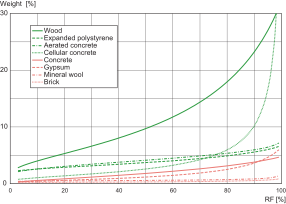
Figure 12. Schematic moisture sorption isotherms for common building materials. The moisture sorption isotherms are highly dependent on the size and distribution of pores in the material. Consequently, there is a big difference between coarse-pored materials (such as brick), and materials with numerous fine pores (such as wood). Moreover, the moisture sorption isotherms depend on the wood species or the specific composition of the concrete.
The top isotherm shows that wood in air with a 50 % RH will have a moisture content of approx. 10 % (e.g., indoor wood in summer). In winter, the RH in heated rooms may drop to 30 %, for example. At this RH the curve shows that wood would have a water content of about 7 %. A collection of moisture sorption isotherms (along with a mathematical model/formula) is available in Hansen (1986).
The top isotherm shows that wood in air with a 50 % RH will have a moisture content of approx. 10 % (e.g., indoor wood in summer). In winter, the RH in heated rooms may drop to 30 %, for example. At this RH the curve shows that wood would have a water content of about 7 %. A collection of moisture sorption isotherms (along with a mathematical model/formula) is available in Hansen (1986).
Temperature changes will result in similar sorption isotherms, but they will be slightly higher or lower. The amount of moisture absorbed will rise when the temperature drops. However, in the specific area where physical building assessments are normally performed, the temperature is less significant, and its influence is normally disregarded.

Figure 13. Schematic sorption isotherms (moisture sorption isotherms) for wood at two different temperatures. The material may, at a given RH, contain more moisture at a lower temperature.
The Shape of the Sorption Isotherm
A typical sorption isotherm consists of three areas, each with its own characteristics
(see Figure 14).
Theoretically, even the biggest pores are filled if the RH is sufficiently high. In practice, however, a limit for hygroscopically bound moisture is set at 98% RH.
Sorption isotherms can be quite different, even within identical material groups, depending on density and pore structure. Generally, sorption isotherms should be applied with great care.
Sorption isotherms for organic materials (such as wood, plywood, wood fibre panels, etc.) are generally higher than for materials like brick, concrete, and gypsum.
If a material contains salts, this will render changes in the sorption isotherms. Salt may derive from salts in the soil or brickwork, the use of thawing salt on snowy roads, or salty air in coastal areas.
Sorption isotherms are normally determined empirically. For some materials, empirical data has been used to produce formulae or mathematical descriptions of the sorption isotherms (Hansen, 1986).
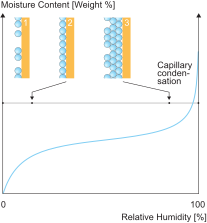
Figure 14. A schematic of a sorption isotherm. The pores are gradually filled with water in tandem with the rising of relative humidity. (The isotherm is based on Chorkendorff & Niemantsverdriet (2002) and Hansen (1986)).
- For the lowest moisture content, the curve shows a steep rise. For the moisture layers adsorbed directly to the interior surfaces, the binding forces are great, and the material may therefore quickly capture water molecules. This accounts for the steep rise.
- The increase in the equilibrium moisture content is somewhat slower because the binding in the subsequent molecule layers is progressively weaker. The equilibrium moisture content will increase almost proportionately with the RH.
- In this area, a marked influence is exerted by capillary condensation. This means that there will be a steep rise which is especially pronounced where the RH values are highest.
Hysteresis
Sorption isotherms for humidification and drying display hysteresis, meaning that they deviate from each other. The difference is linked to the physical mechanisms that determine when a material has become humidified and when it will be dehumidified (see Figure 15).
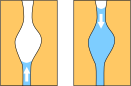
Figure 15. Humidification and dehumidification of porous materials depend on the pore size, as the meniscus in the pores is decisive for the water content at a given RH. On the left, the meniscus cannot facilitate water intrusion because the pore radius becomes too big. As a result, gravity cannot be surmounted by capillary action acting on the meniscus. On the right, the pore continues to be water-filled because the meniscus in the above narrow pore surmounts gravity.
The curves defining humidification and dehumidification are known as absorption and desorption isotherms, respectively. Figure 16 shows that absorption isotherms run slightly lower than desorption isotherms.
The extent of the hysteresis effect is relative to the material and its pore structure.
This means that the history of the material affects its current moisture content. When a material is alternately exposed to moisture absorption and desorption, the moisture content will move in curves linking the absorption and desorption isotherms.
In practice, hysteresis is normally disregarded and a ‘median curve’ is used instead. This median curve is known as the sorption isotherm.
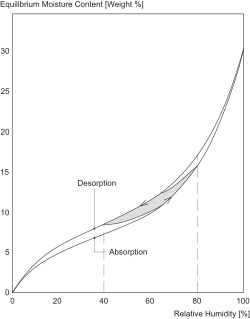
Figure 16. Hysteresis in connection with sorption means that materials at a given RH for absorption have a lower moisture content than for desorption. Fluctuations in RH result in the moisture content moving between absorption and desorption isotherms. As a rule, a ‘median curve’ (sorption isotherm) is generally considered reliable.
In practice, variations in moisture will normally occur within a limited area and the moisture content will change within the lentoid area.
Moisture Capacity
The gradient on the sorption isotherm indicates the moisture capacity. It expresses the change occurring in moisture content when RH changes. If a small change in RH results in a significant change in moisture content, the moisture capacity of the material is great at that specific point of the sorption isotherm. Given that the sorption isotherms are steepest at very low or very high RH values, the moisture capacity is greatest in these areas.
For example, the sorption isotherms curve wood is far steeper than that for brick. Thus, wood has a greater moisture capacity than brick. This means that wood takes up or gives off considerable amounts of moisture as the RH changes (see Figure 17). If the RH is changed, wood will take up or give off moisture to achieve equilibrium with the new context, hence slowing the change in humidity. If there is a drop in the ambient RH, wood will initially give off moisture to regain equilibrium at the lower humidity level and the moisture given off will then contribute to maintaining the ambient RH. Therefore, wood acts as a buffer and compensates for sudden changes in RH (see Figure 18).

Figure 17. Example illustrating the importance of equilibrium moisture content and what might happen (e.g., when a wooden floor is laid without a moisture barrier on a concrete deck which has not dried out).
Top: A wooden block with a dry weight of 1 kg and a water content of 100 g (10 %) is placed in a plastic bag. The bag is vapour-impermeable and contains 1 litre of air which can hold a maximum of 0.017 g of water at 20 °C. The sorption isotherm in Figure 12 shows that the water content of the wood reaches equilibrium at 50 % RH. This air humidity quickly reaches equilibrium by the wood giving off or taking in a minimal amount of water to/from the air. Now the concrete block with a dry weight of 1 kg and a water content of 50 g (5 %) is added to the bag. The sorption isotherm shows that the water content of the concrete reaches equilibrium at approx. 97 % RH and it will thus give off moisture to the air.
Bottom: The moisture given off by the concrete will be taken up by the wood. The moisture transport out of the concrete and into the wood will continue until equilibrium is reached (i.e., when the water content of both materials equals air with the same RH). This happens at approx. 70 % RH where the water content in wood is 13 % and in concrete is 2 %.
In total, 30 g of water is moved from the concrete to the wood.
Top: A wooden block with a dry weight of 1 kg and a water content of 100 g (10 %) is placed in a plastic bag. The bag is vapour-impermeable and contains 1 litre of air which can hold a maximum of 0.017 g of water at 20 °C. The sorption isotherm in Figure 12 shows that the water content of the wood reaches equilibrium at 50 % RH. This air humidity quickly reaches equilibrium by the wood giving off or taking in a minimal amount of water to/from the air. Now the concrete block with a dry weight of 1 kg and a water content of 50 g (5 %) is added to the bag. The sorption isotherm shows that the water content of the concrete reaches equilibrium at approx. 97 % RH and it will thus give off moisture to the air.
Bottom: The moisture given off by the concrete will be taken up by the wood. The moisture transport out of the concrete and into the wood will continue until equilibrium is reached (i.e., when the water content of both materials equals air with the same RH). This happens at approx. 70 % RH where the water content in wood is 13 % and in concrete is 2 %.
In total, 30 g of water is moved from the concrete to the wood.

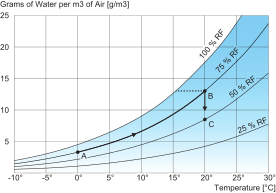
Figure 18. A water vapour chart which describes wood acting as a moisture buffer. In a cold holiday home during winter, the woodwork will achieve moisture-air equilibrium at approx. 0 °C and 75 % RH (A in the water vapour chart, bottom). This corresponds to a moisture content of approx. 15 % in the wood. If the house is heated to 20 °C, the wood will compensate to maintain a 75 % RH in the indoor air (B) and will thus give off water to the indoor air, causing the moisture content of the air to rise by 9 g/m3 (from 4 to 13 g water per m3). With the given assumptions, this means that 100 m3 ∙ 9 g = 0.9 kg of water vapour needs to be given off almost immediately. In winter, a relative humidity as high as 75 % at 20 °C can cause condensation on windows, etc., as the dew point for parts of the window will often be around 14–15 °C. The wood will continue to release moisture until the water content in the woodwork has been reduced to 10 % or less (C), which is typical of indoor conditions in winter. Since large amounts of water are given off during the dehumidification of the wood, several weeks may elapse before the final equilibrium occurs. Therefore, it is necessary to air out unheated holiday homes thoroughly when visiting in the winter.
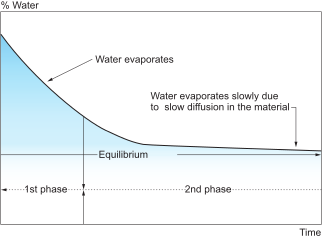
Figure 19. A graph showing the change in percent water over time, while drying out wet material. In the first phase, there will be a substantial evaporation from the surface. At some point, the outer layers of the material will have dried sufficiently and water is no longer transported to the surface by capillary action. In the second phase, transport of moisture out of the material will occur slowly because the moisture transport through the pores of the material is by diffusion of water vapour.
2.2.3 Capillary Suction
Porous materials can take up moisture by capillary suction. Capillary suction can cause rising damp in basement walls in contact with groundwater, and humidification of facade materials exposed to driving rain.
Capillary suction is the result of the joint effects of the force of cohesion between the individual water molecules and forces of adhesion between water and material.
The force of cohesion between the individual water molecules leads to surface tension in the water (σ) comparable to a membrane on the surface. Similarly, water in contact with solid material will settle on the surface, forming a characteristic angle (α) with the surface. This angle is known as the contact angle and is relative to the adhesion that exists between material and water. For commonly used building materials, the contact angle is very small at almost 0 degrees.
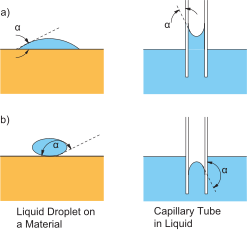
Figure 20. The adhesion occurring between liquid and substrate will determine the shape of a droplet on the surface. If the contact angle (α) is small (as shown on drawing a), the droplet will be big and the liquid will moisten the surface. This is the condition that normally exists between water and building materials. Conversely, a large contact angle will mean that the surface will not sorb moisture. This is the desired effect when a surface is given a silicone or nano-coating.
If a thin tube is inserted into a liquid, in one scenario (a) the contact angle will result in the liquid being drawn into the tube and, in the other scenario (b) the contact angle will result in the liquid being pressed down in the tube due to surface tension.
If a thin tube is inserted into a liquid, in one scenario (a) the contact angle will result in the liquid being drawn into the tube and, in the other scenario (b) the contact angle will result in the liquid being pressed down in the tube due to surface tension.
In thin tubes or pores, a concave water surface is formed (meniscus) if the forces of adhesion between material and water are sufficiently great. If the contact angle between water and material is less than 90°, the surface tension will lead to negative pressure on the surface of the liquid. This results in an upward-flowing force (p) capable of drawing the water into the pores. At the same time, gravity acting on the liquid will try to drive the water out of the pores again. For a circular pore, this force can be calculated as:
where
The capillary rise (h) is calculated as:
where
The capillary rise increases proportionately to the decreasing pore diameter. This means that the capillary rise in small pores is higher than that of large pores. Conversely, flow resistance in the small pores is greater than in large ones.
Consequently, materials with coarse pores will take in moisture very quickly. If the end of a brick is soaked in water, the whole brick will quickly fill up with water.
Finely-grained materials (such as clay) will have a great capillary rise, but the capillary action will be relatively slow.
The difference in capillary rise between fine and coarse materials means that moisture can be drawn from coarse to fine materials: for example, finely-grained rendering can draw moisture from a coarser-grained materials which the render is in contact with. For a facade soaked by driving rain, this means that the water can be drawn to the surface by capillary action through the fine rendering layer on the outside of the facade.
Capillary Breaks
Structures must be designed to prevent moisture from being drawn from the soil by capillary action or from damp structural parts to parts that must be kept dry.
Often, the primary goal is to prevent moisture from being drawn from soil to the floor construction or from foundations to the wall construction above.
One can prevent capillary action by installing capillary breaks between the damp materials and those needing protection against moisture.
A capillary break is normally comprised of coarse-grained materials with little or no capillary rise. Coarse-grained grit, shingle, or coated expanded clay aggregate pellets are normally used. The grain size must be at least 4 mm and the material should be clean (washed), as water can be drawn up through fine surface materials by capillary suction.
To safeguard against capillary suction, the capillary break should have a thickness that is at least double the experimentally determined capillary rise of the material.
Watertight materials (i.e., materials without pores or with closed pores impenetrable to water) will also act as capillary breaks. Expanded polystyrene with closed pores is often used (e.g., for ground floor slabs as part of the capillary break).
Furthermore, an air gap big enough to prevent the water from forming a bridge across it will act as a capillary break. However, in turn this may form a thermal bridge in the construction.
The durability of watertight materials used as capillary breaks in their specific contexts should be carefully documented.
2.3 Dimensional Changes
Fluctuations in the moisture content of materials will often mean that their properties may change. Considerable changes in diffusion resistance may occur in some materials, depending on the ambient RH. This is why it may be desirable to determine the water-vapour diffusion resistance of materials in specific conditions resembling the given situation. This is the property exploited when installing moisture-adaptive vapour barriers where the water vapour diffusion differs greatly, depending on whether the surroundings are damp or dry.
Another important property which may change relative to the ambient RH is the dimensions of the material. The dimensional changes occurring in wood are especially drastic and a mean dimensional change of 0.22 % (of width and thickness) is often calculated for each percentage of change in the moisture content of wood (percentage by weight). For example, a change in water content (moisture content of wood) from 7 % in winter (indoor air with an RH of 30 %) to 12 % in the summer (indoor air with an RH of 60 %) results in dimensional changes of approx. 1 % (see Figure 21). For wood in a newly-built house, the dimensional changes may be considerably greater if the wood used is not sufficiently dry.
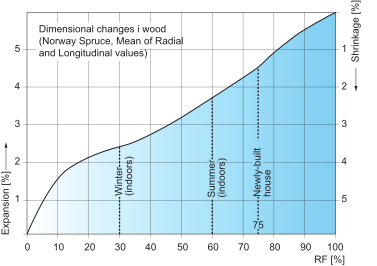
Figure 21. Dimensional changes in wood resulting from variable air humidity. For Norway spruce, the total shrinkage from green wood to room-dry wood is 3–4 %. Annual variations from summer to winter are approx. 1 % of the width and thickness, respectively.
Drying to equilibrium may take a long time for timbers with large dimensions (such as beams) and considerable shrinkage during the final drying-out phase will unfortunately occur (see Figure 22). A floor installed on wooden beams will often have dropped 5–10 mm when the house is one year old. During use, changes in the equilibrium moisture content (and hence changes in the dimensions) of wood will take a long time to stabilise. In practice, this means that brief changes in the ambient RH will not usually result in appreciable dimensional changes.

Figure 22. Percentage water as a function of time during the drying process for wood. The drying time is highly dependent on the dimensions of the wood. The two curves indicate that a board approaches its equilibrium moisture content after a couple of weeks, but that a plank needs a couple of months to reach EMC. Floorboards and wood for furniture are supplied ready-dried to the final moisture content. Nevertheless, if a floor is laid before the house is reasonably dry, there is a risk of the wood humidifying and swelling to such an extent that the floor ‘rises’ or is deformed in other ways.
Wooden joists may warp due to differences in moisture content at their upper and lower surfaces. Warping is most frequent in winter and in cases when the joists are surrounded by insulation material covering their full depth.
The cold part of the joists might have a moisture content of about 15 %, corresponding to the equilibrium of the outside RH whereas the moisture content of the warm part will be approx. 10 %, corresponding to the equilibrium of the RH near the vapour barrier. For example, a roof rafter with a span of 4 m and a depth of 200 mm may warp in an upward direction of approx.15 mm.
This kind of moisture-induced warping can be avoided if the joists are placed entirely on one or the other side of the thermal insulation layer.
Furthermore, in timber frame constructions with wood-based sheeting, warping may occur due to a difference in moisture content on the two sides. Similarly, wooden floors humidified from below could experience a so-called washboard effect. This is warping sustained across the boards due to dimensional differences on the upper and lower sides.
2.4 Moisture Transport
Moisture can be transported in both liquid and vapour form. Moisture transport is always caused by a difference in the potentials driving the moisture. Potential is a concept applied to transport mechanisms in physics and potential differences are a precondition for transport to occur. For example, in an energy context, it is well-known that temperature differences across weather screens cause heat loss. Furthermore, in electrical science, voltage is the electromotive force resulting from an electrical potential difference. Moisture transport mechanisms are analogous to what we know from heat transport and electric current.
In the case of moisture transport, the potential could be water vapour pressure, water vapour content, water pressure, etc. If the water vapour pressure inside is higher than that outside, the difference in water vapour pressure across the weather screen will lead to moisture transport from the inside outward, which is analogous to the heat loss.
Moisture transport is generally expressed as:
where
The transport coefficient (k) is selected in the context with the selected potential (ψ).
Example
If a material, which has equalised moisture content at 10 °C and 75 % RH, is placed in a room at 10 °C and 50 % RH, the following vapour pressure difference will occur between the material and the air:
Difference in vapour pressure = 920 – 614 = 306 Pa
If, instead, the temperature had been 20 °C, and the RH in the material and air, had remained unchanged, the difference in vapour pressure is expressed as:
Difference in vapour pressure = 1752 – 1168 = 584 Pa
Therefore, with the selected assumptions the difference in vapour pressure between material and air will almost double when increasing the temperature from 10 °C to 20 °C. This means that the moisture content of the material will be dried out faster and, in theory, the drying rate will have practically doubled.
Transport in liquid and vapour form can occur simultaneously and even in opposite directions. In the concrete slab in a ground floor slab construction, there could be an upward capillary transport in the smallest pores concurrently with vapour transport in a downward direction.
Moisture transport is often regarded as one-dimensional, which is a good approximation for large surface areas where the moisture transport primarily occurs through the slab. However, at edges and in structures where the margins play a significant role (e.g., in structures of small dimensions), moisture transport will be two- or even three-dimensional.
2.4.1 Moisture Transport in Vapour Form
Moisture in vapour form can be moved via diffusion, convection, or effusion.
- Diffusion is the movement of water molecules. Diffusion is driven by differences in vapour pressure/water vapour content and the movement occurs in the direction of the decreasing pressure/water vapour content.
- Convection is the flow of air between areas of different pressure (e.g., caused by wind load or thermal uplift).
- Effusion or thermal diffusion is caused by special kinds of diffusion due to temperature differences. These are merely included for the sake of completeness because they are of negligible significance to structural applications.
Diffusion in Air
In the gaseous phase, molecules move independently of one another, and their speed is relative to the temperature (where high temperature means high speed). In a gaseous mixture that is initially inhomogeneous, the molecules will gradually distribute evenly due to their movement (i.e., there will be a movement from areas of high concentration to areas of low concentration). Transport driven by molecular movement is called diffusion.
Therefore, in an air volume where the water vapour pressure is not consistent everywhere, there will be diffusion-driven movement from places with a large water vapour pressure/water vapour content to places with low water vapour pressure/water vapour content. For example, in winter, the water vapour content of the air is usually higher indoors than outdoors. In winter therefore, there will be moisture transport out of the building due to diffusion through the walls, roof, etc.
Calculations usually consider flux: the water vapour flow through a unit of area. For still air with no temperature differences (isothermal conditions), moisture transport is expressed by equation (12). In the case of water vapour, this is expressed as Fick’s first law of diffusion:
where
Dv = Dp RvT
where
At 20 °C and normal air pressure (101325 Pa), D_p is approx. 1.9 ∙ 10-10 kg/m s Pa, and D_v approx. 25 ∙ 10-6 m2/s.
At a constant temperature and air pressure, then, the flow of water vapour is exclusively dependent on the water vapour diffusion coefficient in the air and the gradient of the water vapour concentration (i.e., the change per longitudinal unit in the direction of flow).
The minus sign in the right side of equation (12) expresses the movement of moisture transport from an area of high to an area of low water vapour concentration/pressure.
In practice, it is often advisable to use the water vapour concentration as potential. Although the diffusion coefficient (D_v ) is slightly dependent on the temperature in the area of structural interest, the variation is very modest.
Therefore, during normal conditions of use the water vapour concentration can be applied with reasonable accuracy.
Diffusion in Materials
Diffusion of water vapour can also occur into, out from, or through porous materials.
When water vapour infiltrates a material, the diffusion coefficient will be reduced because the movement of the vapour molecules is restricted. In the case of coarse-grained materials (e.g., with pores sized 10-6–10-7m) the reduction is small because there is still room for relatively large movements without the risk of colliding with the pore walls. Large movements should be seen in relation to the mean free path, or the average distance travelled by a molecule between two collisions of about 40 ∙ 10-9 m. For finer pores, on the other hand, there will be an increasing risk of collision with the walls rather than with other molecules.
Equation (12) can also be applied to vapour transport in materials by introducing a factor μ (the water vapour diffusion resistance factor) which is used to adjust the air diffusion coefficient:
where\delta_p designates water vapour permeability [kg/(m s Pa)].
The water vapour permeability ($$ \delta p $$ ) is thus defined as the flux i.e., the water vapour flow which passes through a unit of area at a given gradient and a given location.
For anisotropic materials, the vapour permeability is dependent on the directional flow.
In equation (15), the water vapour pressure is applied as potential. If calculating using the water vapour content instead, equation (15) should be changed to:
where the related water vapour permeability (δv) based on the equation of state can be calculated as follows:
where
The constant 461.4 has the unit: \left\lbrack\frac{Pam^3}{\operatorname{kg}K}\right\rbrack
For T = 273 + 20 = 293 K equals
Moisture transport can be calculated according to one of the two formulas (15) or (16).
For the calculation or moisture-performance assessment of materials with a fixed thickness, the water vapour diffusion resistance factor is normally used. This is referred to as the Z-value. The Z-value is defined as:
where
Other units than the Z-value can be applied and a comparison between the different materials will therefore require conversion to identical units. Units commonly applied internationally and their relationships to the Z-value are given in Table 22.
Stationary and Non-Stationary Flow
Stationary flow means that the moisture flow does not vary with time. Accordingly, there is a balance between the moisture being added and being removed. In practice, almost all flows are non-stationary because exterior conditions change.
Drying out construction-related moisture is an example of non-stationary moisture transport where the moisture dries quickly to both sides to begin with (where moisture content and vapour pressure are usually large compared to the surroundings) (e.g., inside a wall). After some time, if exterior circumstances (peripheral factors) remain unchanged, most of the moisture will eventually have dried out and a phase of largely stationary moisture transport will begin.
Moisture conditions for non-stationary flows cannot be expressed in simple terms and can normally only be calculated using numerical methods.
An approximated calculation of moisture flow for diffusion is therefore based on stationary water vapour transport.
where
The following applies to layered structures:
where
Transition resistances are usually small in relation to the total diffusion resistance. In practice, they can be disregarded except when assessing the dehumidification rate of surface-wet structures.
For multilayer structures, the vapour pressure differences above a given layer are calculated as:
where
Equation (21) can be applied when calculating the distribution of vapour pressure and vapour content in a structure (cf. Section 6.3.2).
Example
In a single-family dwelling, the area represented by exterior walls and ceilings both measure 120 m2. The exterior walls consist of 410 mm insulated cavity wall and the ceilings are gypsum boards fastened to battens, a vapour barrier of 0.2 mm Pe-foil, and insulation.
Assumption for outdoor conditions are 0 °C, 90 % RH, and for indoor conditions 20 °C, 40 % RH. The water vapour pressure outside and indoors can now be calculated as:
The Z-value for the materials added to the exterior walls: 5 GPa s m2/kg for 108 mm brick and 0.6 GPa s m2/kg for the insulation. The Z-value for the exterior walls can then, cf. equation (20), be calculated as 5 + 0.6 + 5 = 10.6 GPa ∙ m2 ∙ s/kg
Moisture transport through the exterior walls due to diffusion can, cf. equation (19) be calculated as:
The Z-value for the vapour barrier in the ceiling can be assumed to be 500 GPa s m2/kg. The Z-values for the remaining materials in the loft assembly are so small compared to the Z-value for the vapour barrier that they can be disregarded.
Moisture transport through the ceiling due to diffusion can, cf. equation (19),
Be calculated as:
The Z-value for the vapour barrier in the ceiling can be calculated as 500 GPa s m2/kg. Z-values for the other materials in the loft construction are so small by comparison to the Z-value as to be disregarded.
Due to diffusion, moisture transport through the ceiling can be calculated as follows (cf. equation (19)):
Moisture Convection
In convection, water vapour transport occurs when moist air is moved by airflow. Airflow occurs when there is a difference in air pressure over the relevant air volume (e.g., due to wind load), air pressure caused by ventilation systems, or temperature differences.
Natural convection can occur in the rooms of a building, in air-filled spaces in building structures, and in cavities insulated with highly vapour-permeable materials. Natural convection can be instrumental in redistributing moisture where pressure differences are generated above a construction.
When pressure differences occur over a construction (e.g., between the air in the dwelling area and the air in the loft construction) convection will cause a transport of air and water vapour through leakages (e.g., holes, cracks, or badly executed joints in the interface).
If water vapour is transported from a cold construction into a warm building (e.g., by water load on an exterior wall) the relative humidity will drop when the cold air is heated.
If the transport is reversed from the building into a cold construction, the relative humidity will rise, and condensation may occur.
The amount of air capable of flowing through porous material due to a pressure difference can be calculated by Darcy’s law:
where
Therefore, the airflow is proportional with the air pressure above the structure, the area, and the material’s specific air permeability. The minus sign expresses a flow towards a drop in pressure.
Darcy’s law only applies to laminar flows. Calculating air flows through leakages such as holes, cracks, and gaps is significantly more complex. In this case, the calculation will be done by applying approximation formulas relative to the geometric conditions.
Holes or Cracks in Thick Layers (b < d) (see Figure 23)
Given that the thickness of the layer in relation to the size of the hole is large, the flow is approximated to a laminar flow (where the loss of pressure due to turbulence at an inlet and outlet is usually so small as to be disregarded). The flow is approximated proportionally to the pressure difference over the layer:
where

Figure 23. Airflow (convection) through small leakages depends on the pressure difference, the size of the opening, and the thickness of the material as expressed in the formulas (23) and (24).
Holes or Cracks in Thin Layers (b ≥ d)
Given that the layer is thin compared to the extent of the leakage, the loss of pressure above the layer is almost exclusively due to the loss of pressure at the inlet and outlet which is purely turbulent airflow. In this case, the pressure loss will be approximated proportionally with the square root of the pressure difference above the layer:
where
If the amount of air L and its moisture content has been determined, the transported amount of moisture can be determined as
Pressure differences over the weather screen especially occur due to:
- Wind impact on the building
- Ventilation systems
- Stack effect
Wind Impact
The wind can affect the building with both positive and negative pressure.
When there is negative pressure on the outside of the structure, convection of warm indoor air into the cold construction may occur.
The pressure difference can be very large (e.g., above flat roofs or on the leeward side of the building). Negative pressure of up to 200–250 Pa may occur, but normally only for short periods.
However, there will almost constantly be a slight negative pressure above flat roofs. Vent cowls (which were previously commonly used to ventilate flat roofs) result in the negative pressure above the roof which propagates into the construction. The pressure difference that emerges (between the inside of the building and the vented cavity) can be a contributing factor to moist indoor air being drawn into the roof construction.
Ventilation System
Ventilation systems change the natural pressure conditions in buildings. From a moisture performance perspective, ventilation systems should run at a modest negative pressure to counter the convection of air from the inside into the construction. This implies, however, that the radon barrier is intact.
In pressure ventilation, the air pressure is kept higher inside than outside. Even a modest and commonly used pressure of 10–20 Pa may cause increased convection and lead to moisture damage.
Consequently, pressure ventilation should be avoided if possible. If not, the building’s weather screen should be made fully airtight to reduce or prevent the possibility of convection-induced moisture damage.
Stack Effect
During normal winter conditions, there will be negative pressure in the lower part of the building and positive pressure in the upper part. The reason being that warm air is lighter than cold air and will rise.
In all buildings, there will be a neutral zone where indoor and outdoor pressure is identical. Below the neutral zone inside the building, the pressure is negative whereas, above it, the pressure is positive. The extent and distribution of the positive pressure (and the negative pressure) depend on the difference between outdoor and indoor temperatures, building height, and the distribution of openings and leakages in the weather screen. If openings are evenly distributed across the weather screen, the neutral zone is likely to be at the centre of the house (e.g., halfway between floor and ceiling) (see Figure 24).
The pressure in indoor as well as outdoor air at a given height above the neutral zone can be determined as the pressure in the neutral zone minus the gravity of the air column above the neutral zone.
Thus, the pressure difference corresponds to the difference in gravity of the interior air column (designated index i) and the exterior air column (designated index u) between the neutral zone and the height (h):
where
Using the gravitational acceleration g = 9.81 m/s2 and the approximated value ρ = 348 / T [kg/(m3)] (by means of the ideal gas law), the pressure difference can be determined with the following equation:
where

Figure 24. The stack effect in buildings is due to pressure gradients caused by uplift forces of warm air (warm air being lighter than cold air) (cf. equation (27)).
The positive pressure occurring in small (low) buildings is relatively modest whereas it can be significant in multistorey buildings with open stairwells or lift shafts.
Although the positive pressure does not appear especially great, it should be kept in mind that it is constant, and the pressure difference can therefore be critical in terms of moisture transport (see the following example).
Convection via common building materials is normally insignificant. Only in the most porous materials (such as mineral wool which has a low density) may significant convection occur. Convection is therefore of particular interest in connection with leakages in the weather screen, including the vapour barrier.
Provided that any holes or gaps are very small (0.1 mm or less), the most important transport mechanism is normally diffusion. If the leakages expand, moisture transport via convection through leakages can become dominant. In practice, moisture transport via convection is often a greater problem than via diffusion.
Example
- Scenario A, is a two-storey open-plan dwelling, the indoor temperature in winter is 20 °C. The storey height is 3 m. One can assume that the neutral zone lies centrally in the storey partition and a positive pressure below the ceiling corresponding to a distance of 3 m above the neutral zone.
At an outside temperature of 0 °C, there will be a pressure difference above the roof assembly of:
- Scenario B is a five-storey building, of the same storey height, with an open stairwell, and with the neutral zone approx. at the centre of the building. Under identical temperature conditions, the height (h) is now 7.5 m and the positive pressure below the ceiling in the stairwell can be calculated as:
Example
Above a structure, there is pressure difference of 2.6 Pa (cf. the above example) with the highest pressure being inside. The indoor air temperature is 20 °C with an RH of 40 %, which means that the water vapour content is approx. 6.9 g/m3.
By using the above formulae ((23) and (24)), the moisture transport for convection through potential leakages in various types of structures can be calculated.
Through a 1 m long and 1 mm wide gap in an exterior brick wall with a thickness of 300 mm, there is a moisture transport of approx.:
G = 1700 ∙ (A ∙ b2)/d ∙ Δp ∙ ν= 1700 ∙ (1 ∙ 0.001 ∙ 0.0012)/0.300 ∙
2.6 ∙ 6.9 = 0.60 g/hour = 8.8 g/24-hour period
Through a 1 m long crack with 1 mm width in a vapour barrier, eg in a ceiling as described in the example about moisture transport by diffusion, cf. the section about Diffusion in Materials, there is a moisture transport equivalent to about:
G = 0,8 ∙ A ∙ Δp0,5 ν = 0,8 ∙ (1 ∙ 0,001) ∙ 2,60,5 ∙ 6,9 = 42,0 g/hour = 768 g/24-hour period
Comparing the example of diffusion where identical temperature and moisture conditions are applied, it is evident that under normal conditions, far larger amounts of moisture can be transported by convection than by diffusion. In the examples, the exchanges are 8 g/24-hour period for diffusion via the total loft surface and 768 g/24-hour period for convection through a gap.
2.4.2 Drying Out Construction-related Moisture
Large amounts of water may have entered the building during construction. This moisture may result from the water added to mortar and concrete, damp materials being supplied to the construction site, or precipitation during construction.
The drying rate depends on how big a difference there is between the water vapour content of the air inside the pores of the material and in the ambient air. In the pores of moist materials, the humidity is always 100 % RH, corresponding to the top curve in the water vapour chart. When the temperature is increased, the water vapour content in the material’s pores will rise as will the difference between water vapour content and that of the ambient air, assuming that the water vapour content of the indoor air is kept low via airing.
In summer, there may be a difference between the water vapour content in the pores of wet materials and indoor air of approx. 7 g per m3, but in winter, the difference is less than 1 g per m3 if the room is unheated. In winter, the best drying conditions exist if the temperature is kept to at least 20 °C, which gives a difference in water vapour content of around 13 g per m3. To achieve the same drying-out rate in winter as in summer, it will only be necessary to keep the temperature at approx. 13 °C. While being heated, the building should be constantly aired out.
Condensation Drying
Condensation drying sends the indoor air through a cooling system with a refrigeration compressor cooling the air down to a few degrees above freezing. During this process, water is separated from the air. The air is immediately reheated.
This method is only effective at temperatures above 10–15 °C.
Absorption Drying
Absorption drying will dehumidify the air by sending it through a moisture-absorbent material in a rotor where the material is regenerated with warm air. This method can be applied at relatively low temperatures (see Figure 25).
Absorption drying can be used to dry out a building in winter without heating it. Absorption drying can also be used to maintain a low relative humidity in unheated storage halls, etc. Dehumidification using the absorption method will achieve a lower moisture content than condensation drying.
Both methods require the building to be tightly closed, as the circulated air is relatively dry. If air can penetrate from the outside, energy will be used to dehumidify the outside air rather than drying out the building.
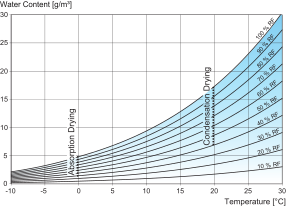
Figure 25. The figure shows a dehumidification process using condensation drying where water is separated out in a cooling system with a cooling compressor, and absorption drying where water is separated out through a moisture-absorbent material. The latter method is especially suited for use in winter without heating.